The “Guilty Face” Myth: Why Your Dog Isn’t Actually Sorry
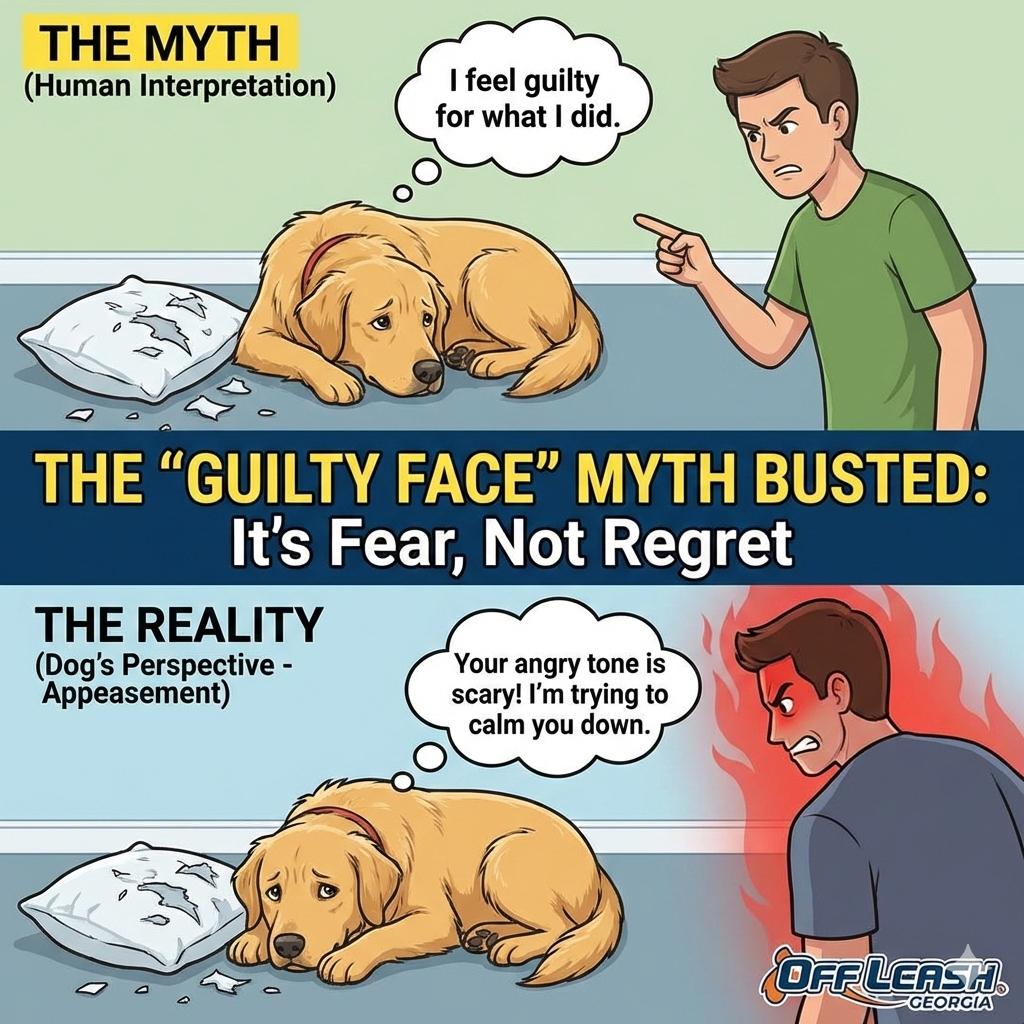
We’ve all been there. You walk into the living room to find a shredded pillow or a tipped-over trash can. Your dog is slinking away, ears pinned back, whites of their eyes showing, looking like they just confessed to a major crime. You think, “He knows he did something wrong.”
The Science: Research, most notably by Dr. Alexandra Horowitz, suggests that dogs don’t actually feel “guilt” in the way humans do. In her studies, dogs showed the “guilty look” even when they hadn’t done anything wrong, simply because their owners were using an accusatory tone.
What you’re actually seeing are appeasement gestures. In the dog world, when a leader is angry, a subordinate dog uses specific body language to say, “I see you’re upset, please don’t hurt me—I’m not a threat!” They aren’t reflecting on their past actions; they are reacting to your current body language.
Why This Matters for Training: If you punish a dog for something they did ten minutes ago, they won’t link the punishment to the “crime.” They only learn that you are unpredictable and scary when you come home.
-
The Fix: Focus on management (don’t leave the trash out) and setting them up to catch them on your time. If you didn’t catch them in the act, take a deep breath, clean it up, and plan how to prevent it next time.