Preventing the Post-Summer Blues: How to Prepare Your Dog for the Back-to-School Shift
Summer is packed with backyard BBQs, late-night porch hangs, and endless attention for your four-legged family member. But as schedules shift, backpack zippers start flyin’, and the house suddenly goes quiet for eight hours a day, our dogs can experience a major culture shock.
If your dog is used to a bustling home, going from 100 to 0 can trigger stress, boredom, or full-blown separation anxiety.
To help your pup transition smoothly into the new school year, here are four simple ways to beat the post-summer blues before the first morning bell rings.
1. Practice “Fake Departures” Early
Dogs are experts at reading our routines. They know that picking up keys, slipping on shoes, or grabbing a backpack means they’re about to be left alone.
Start desensitizing them to these triggers now:
-
Pick up your keys, put on your shoes, and then… sit down on the couch and watch TV.
-
Walk out the front door, wait 30 seconds, and come back in without making a big deal out of it.
-
By making departures non-events, you take the anxiety out of the routine.
2. Shift Your Morning Routine Before Day One
If morning walks are about to get pushed from 9:00 AM to 6:30 AM, don’t wait for the first day of school to change the clock. Gradually move meal times, potties, and exercise sessions 10–15 minutes earlier each day.
Pro-Tip: Focus on mental energy in the morning. A 10-minute sniff-focused walk or a quick puzzle game or ball throwing burns more brain energy than a fast 20-minute power walk, leaving your dog ready to nap while you run out the door.
3. Create a High-Value “Goodbye” Routine
Help your dog associate your departure with something wonderful instead of something sad.
-
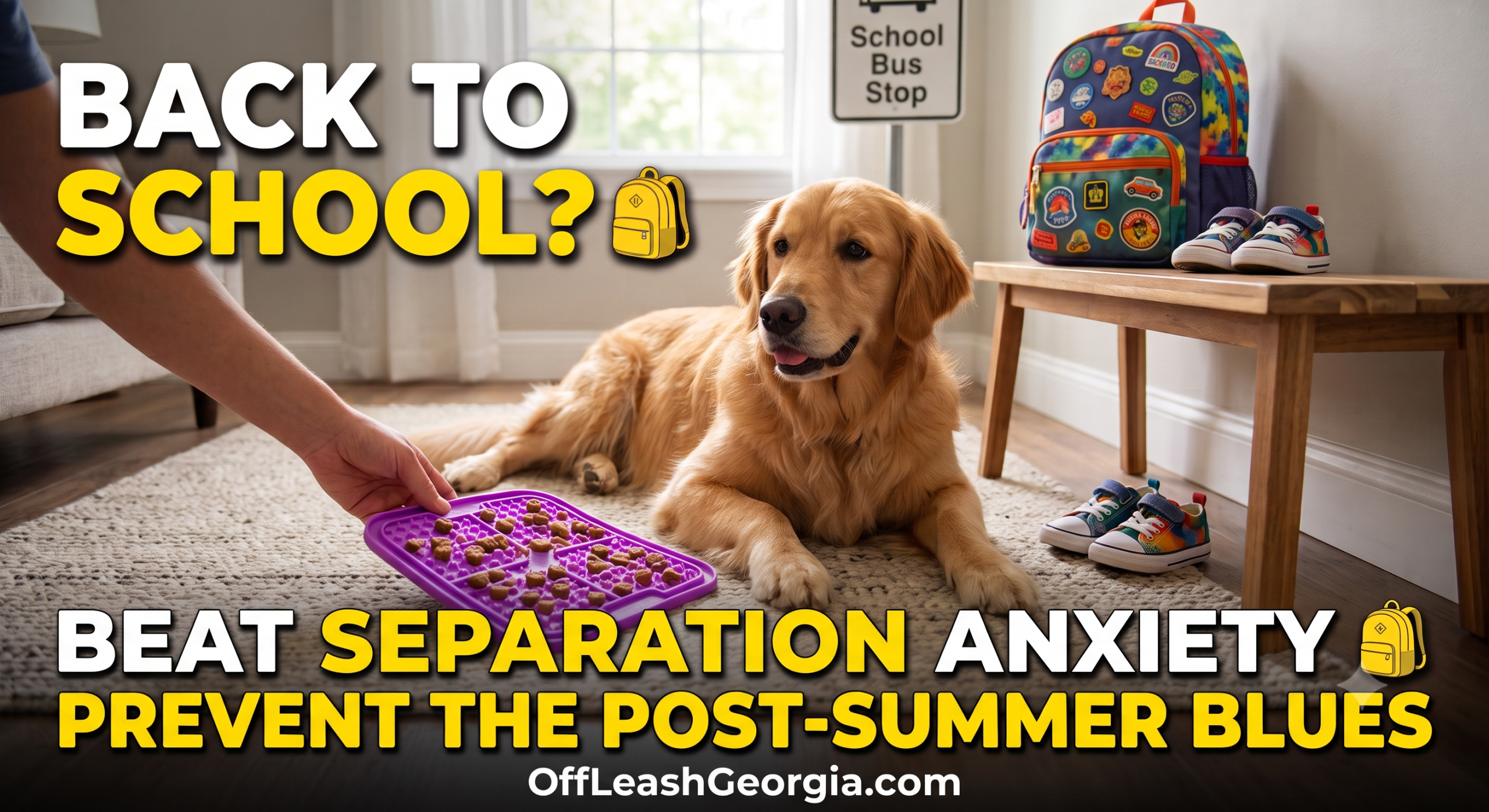
Save special, long-lasting treats—like a frozen peanut butter Kong, a lick mat, or a safe chew—exclusively for when you leave.
-
Hand it over right as you walk out the door.
-
By the time they finish their tasty project, the initial anxiety of you leaving has passed, and they’ll likely settle in for a nap.
4. Keep Arrivals Calm
It’s tempting to throw a celebration when you get home after a long day, but over-the-top greetings can actually increase a dog’s anxiety while you’re away (they spend all day waiting for that massive dopamine hit).
When you return home:
-
Keep your energy low and calm for the first few minutes.
-
Wait until your dog has all four paws on the floor and a relaxed body before giving affectionate hellos.
Spotting the Signs of Stress
Keep an eye out as the schedule changes. Subtle signs of anxiety include:
-
Excessive panting or pacing when you start getting ready
-
Whining or barking shortly after you leave
-
Loss of appetite when left alone
-
Destructive chewing (especially around doors or windows)
Need a Hand Preparing Your Pup?
Transitions can be tough, but you don’t have to navigate them alone! Whether you need to refresh basic manners or work on separation anxiety, we’re here to help.