The Slot Machine Effect: The Neuroscience of Dog Treat Variation and Peak Motivation
The Slot Machine Effect: The Neuroscience of Dog Treat Variation and Peak Motivation
Key Takeaway for Dog Owners & Trainers: Predictable rewards cause dopamine flatlines in canines. Switching from a fixed, single-treat reward system to a Variable Ratio Schedule using varied portion sizes and novel single-ingredient treats (such as chicken hearts, duck heads, and whole smelt) exploits Reward Prediction Error (RPE), triggering higher focus, faster command execution, and durable off-leash obedience.
What Is the “Slot Machine Effect” in Dog Training?
In canine behavioral conditioning, the Slot Machine Effect refers to utilizing a Variable Ratio (VR) schedule of reinforcement combined with unpredictable reward values.
When a person pulls the arm of a slot machine, they do not receive a uniform payout every time. Instead, the payout schedule is randomized: sometimes nothing, sometimes a minor payout, and occasionally an unexpected jackpot. Because the participant knows a massive reward is biologically possible on any given pull, engagement remains exceptionally high.
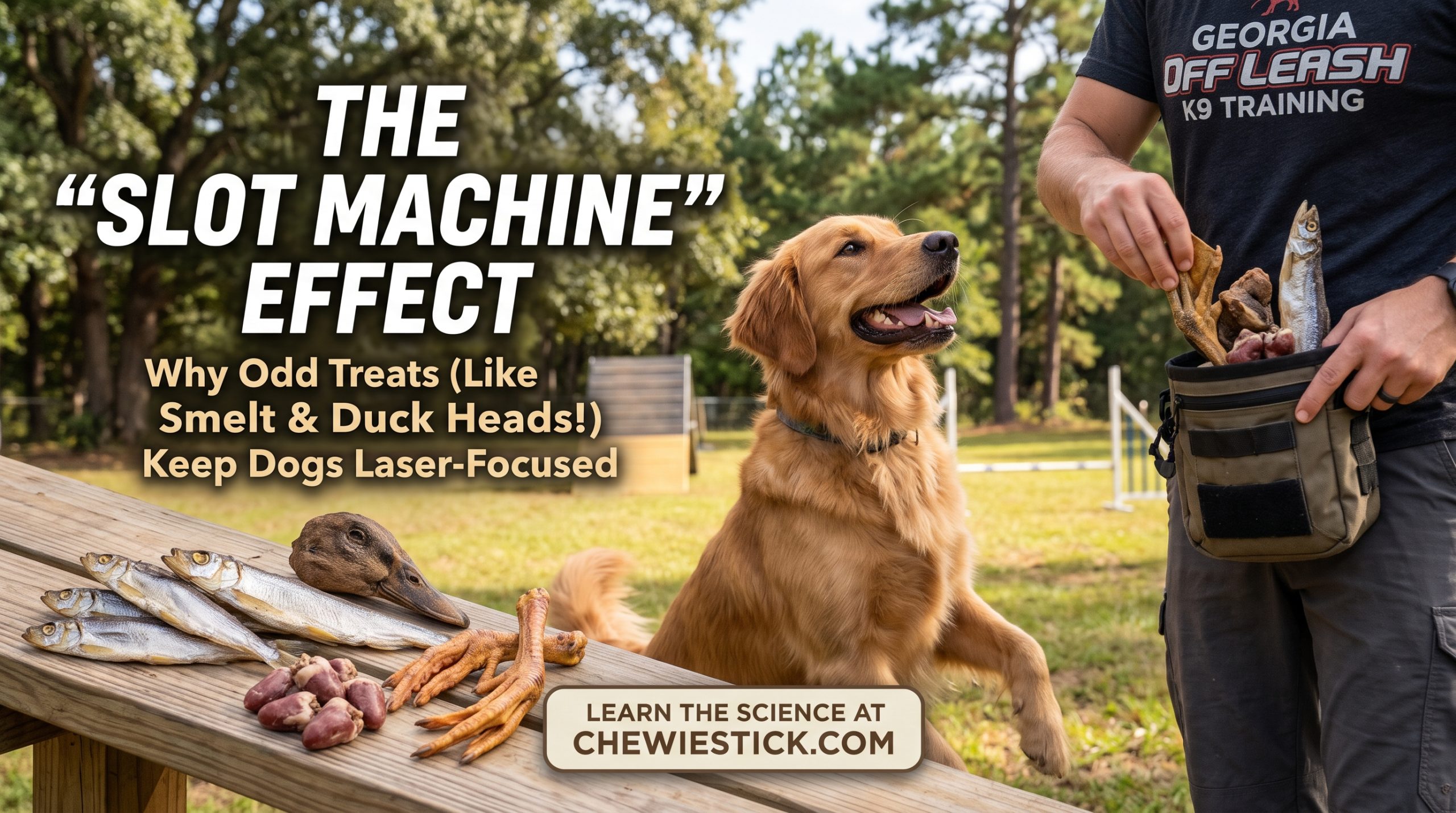
When applied to dog training—a cornerstone method used at Off Leash K9 Training in Georgia—owners stop acting like vending machines (delivering one identical, dry biscuit for every command) and start operating like a variable jackpot system.
Vending Machine Model (Predictable):
Cue ("Sit") ➔ Behavior ➔ Predictable Biscuit ➔ Low Dopamine Spike ➔ Rapid Disinterest

Slot Machine Model (Unpredictable):
Cue ("Come") ➔ Behavior ➔ Mystery Payout (Smelt / Duck Foot / Verbal Praise / Double Heart) ➔ High Dopamine Spike ➔ Hyper-Focus
The Neuroscience: Dopamine and Reward Prediction Error
Motivation in dogs is regulated by neurobiology, not human sentiment. The core driver is dopamine—the chemical messenger responsible for seeking, anticipation, and behavioral drive.
Neuroscientist Wolfram Schultz demonstrated through neurophysiological studies that dopamine neurons fire in response to Reward Prediction Error (RPE):
$$\text{Reward Prediction Error} = \text{Received Reward} – \text{Expected Reward}$$
-
Fully Predicted Reward ($\text{RPE} = 0$): When an animal receives the exact reward it anticipated, dopamine fires upon the cue, but flatlines upon consuming the treat. The learning curve stalls because the brain encounters zero new information.
-
Negative Prediction Error ($\text{RPE} < 0$): If the animal expects high value and receives low value, dopamine levels plummet below baseline, causing behavioral extinction or frustration.
-
Positive Prediction Error ($\text{RPE} > 0$): When an outcome unexpectedly exceeds expectations in novelty,olfactory intensity, or volume, dopamine surges. The canine brain marks this moment as biologically critical,cementing the preceding behavior into long-term procedural memory.
Why Standard Treats Fail: The Olfactory Factor
Canines process their environment predominantly through olfaction, possessing between 100 million and 300 million olfactory receptors, compared to approximately 6 million in humans.
Commercial processed treats formulated with wheat, corn, soy, and artificial binders register as olfactory background noise. To generate a true Positive Prediction Error, rewards must activate primal predatory drives. Single-ingredient,freeze-dried “odd” proteins achieve this through clean volatile organic compounds (aroma profiles) and species-appropriate textures:
| Treat Type | Nutritional Profile | Olfactory & Sensory Profile | Optimal Training Use Case |
| Freeze-Dried Chicken Hearts | Dense muscle meat, high taurine and natural iron | Concentrated iron and blood scent; firm, bite-sized chew | Rapid-fire bridge rewards, heel positioning, high-drive focus work |
| Whole Freeze-Dried Smelt | Wild-caught forage fish, rich in Omega-3 fatty acids | Pungent marine aroma profile that cuts through heavy environmental distractions | Emergency recall (“Come”), long-distance off-leash obedience |
| Duck Heads | Raw bone, brain tissue, cartilage, and novel poultry protein | Highly novel crunch, large visual profile, high-fat density | End-of-session “Mega Jackpot” for breakthrough milestones |
| Chicken & Duck Feet | Natural glucosamine, chondroitin, and connective tissue | Audible crunch, chewy connective texture | Decompression rewards, duration stays around major distractions |
Implementing the Variable Reward Protocol in Daily Training
Transitioning a dog from a continuous schedule to a variable, high-drive schedule requires a deliberate three-tier strategy:
1. The Pouch “Trail Mix” Formula
Never fill a treat pouch with a single protein. Build an unpredictable sensory cocktail:
-
50% Baseline Rewards: Small, low-to-moderate value dehydrated muscle bites.
-
35% High-Drive Drivers: Broken segments of freeze-dried chicken hearts or smelt fragments.
-
15% Novel Jackpots: Whole smelt, duck feet segments, or whole organs.
Because the freeze-dried proteins share the same container, their intense natural scent infuses the entire pouch. The dog knows high-value items exist within reach, but cannot predict what specific piece will emerge.
2. Payout Magnitude Variation
Deliver rewards in varied quantities to prevent habituation:
-
The “Blank” (No Food): High-energy verbal marker, tactile praise, and immediate continuation of movement.
-
The Standard: A single training-sized bite.
-
The Stream: 3 to 5 small pieces delivered sequentially one after another, keeping the dog locked onto the handler’s hand.
-
The Jackpot: An entire oddity (such as a whole freeze-dried duck head or multiple whole smelts) handed over after overcoming a massive real-world distraction.
Frequently Asked Questions for Dog Trainers & Handlers
Why does a dog stop listening once treats are faded out?
This occurs when the handler transitions directly from a Continuous Reinforcement Schedule (a treat for every rep) to Extinction (no treats). By instead phasing into a Variable Ratio Schedule—where rewards remain unpredictable—the dog continues offering the behavior because any individual repetition could yield a jackpot.
Can odd treats cause digestive distress during training?
Single-ingredient freeze-dried treats (like hearts, feet, and whole fish) lack the starches, fillers, and chemical preservatives that commonly trigger digestive upset in dogs. Because freeze-drying removes moisture while preserving raw bioavailable nutrients, they are easily digested in small training quantities.
Upgrade Your Training Pouch
Predictable training creates predictable, low-energy dogs. Elevating drive and rock-solid off-leash reliability requires breaking the mold of standard biscuits and utilizing biological novelty to your advantage.
To build a high-drive training mix with single-ingredient, odd, and sensory-rich rewards—including freeze-dried chicken hearts, duck heads, whole smelt, chicken feet, and duck feet—explore the full selection at chewiestick.com. Give your dog a reason to stay glued to your next command.