The Science of Dog Intelligence: Why Your Dog Isn’t in the Top 10 (And Why That Doesn’t Matter)
The Science of Dog Intelligence: Why Your Dog Isn’t in the Top 10 (And Why That Doesn’t Matter)
Ask almost any pet owner where their dog ranks on the animal intelligence scale, and you’ll get an emphatic answer: near the top. We watch our dogs interpret our moods, memorize their walking routes, and learn complex routines, convincing ourselves that beneath all that fur sits a canine genius.
Yet across comparative cognitive science, dogs rarely crack the top 10 most intelligent species.
When researchers measure general cognitive markers—such as mirror self-recognition, multi-step tool manufacture, and causal reasoning—dogs typically land somewhere between #15 and #20.
Understanding why this is requires examining how science defines intelligence, where dogs struggle, and the one cognitive domain where canines leave every other non-human animal in the dust.
What Does the “Top Tier” Look Like?
To understand why dogs sit around the 15th to 20th spot, look at the animals that consistently dominate cognitive leaderboards:
-
Great Apes (Chimpanzees, Bonobos, Orangutans): Create complex, multi-component tools, plan for future needs,and demonstrate advanced working memory.
-
Cetaceans (Bottlenose Dolphins, Orcas): Possess distinct cultural dialects, transmit hunting traditions across generations, and pass mirror self-recognition tests.
-
Corvids (Crows, Ravens) & Parrots: Ravens can solve 8-step causal puzzles without trial-and-error training, while African Grey Parrots exhibit abstract numerical understanding and categorization.
-
Cephalopods (Octopuses): Exhibit solitary problem-solving, navigate complex physical barriers, and manipulate environmental objects for camouflage.
-
Pigs & Raccoons: Pigs readily master joystick-operated spatial interfaces, and raccoons pick mechanical latches with minimal exploration.
These animals excel at extractive foraging, tool manufacturing, and autonomous physical reasoning—traits heavily selected for in species that must independently outwit hostile environments.
The “Impossible Puzzle”: Where Dogs Fall Short
When evolutionary biologists evaluate raw problem-solving capability, domestic dogs frequently underperform their wild counterparts.
In a landmark study published by cognitive ethologist Ádám Miklósi and later replicated at Oregon State University, researchers presented identical baited puzzle boxes to domestic pet dogs and captive wolves. Both groups were given access to food sealed inside a container that required manual manipulation to open.
-
The Wolves: Persisted continuously, using their paws, muzzles, and teeth. Across trials, roughly 80% of the wolves independently solved the apparatus and retrieved the meat.
-
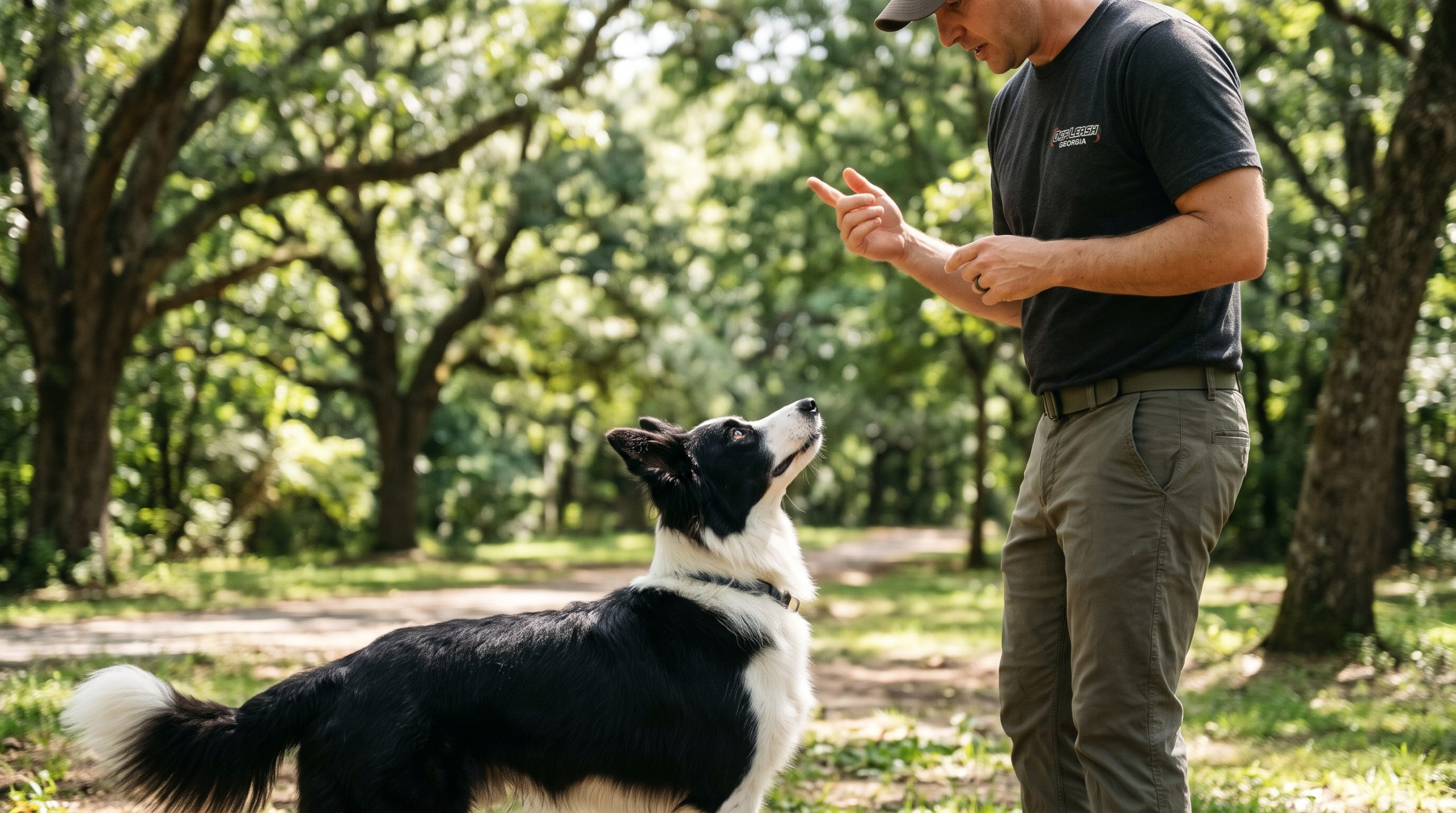
The Dogs: Attempted the box for mere seconds before abandoning independent trial-and-error. Instead, they turned around and looked directly into the eyes of the nearest human.
Problem Encountered
       │
       ├──► Wolf Strategy:  [Physical Persistence] ──► Solves puzzle independently
       │
       └──► Dog Strategy:   [Social Referencing]   ──► Recruits human collaborator
To a scientist measuring mechanical persistence or tool-use, the dog’s behavior looks like failure. But to an evolutionary anthropologist, that look reveals what makes dogs cognitively unique.
The Evolutionary Shift: Survival of the Friendliest
Dr. Brian Hare, founder of the Duke Canine Cognition Center, notes that measuring a dog’s intelligence by tool use is like evaluating a fish by its climbing ability.
During the process of domestication, ancestral canines underwent intense selection for reduced fear and aggression toward humans. This shift, termed the self-domestication hypothesis, transformed canine cognitive development:
1. Interspecies Social Communication
Dogs are among the only non-human animals that instinctively grasp human ostensive communicative cues—like pointing or directed gaze. Even chimpanzees and hand-reared wolves fail standard human-pointing tests at chance rates, choosing random containers.
A two-month-old puppy, with zero prior training, will look at where a human finger is pointing rather than sniffing the hand itself.
2. Social Referencing
Rather than expending caloric energy on insoluble physical problems, dogs evolved cooperative problem-solving. They treat humans as cognitive extensions of themselves. When an obstacle arises, they signal a partner capable of operating doors, opening food containers, and clearing barriers.
3. Receptive Vocabulary
High-drive working breeds demonstrate remarkable semantic categorization. Renowned Border Collies like Chaser and Rico demonstrated the ability to map names to more than 1,000 distinct items, utilizing exclusion-based inference (fast-mapping) identical to how human toddlers acquire new words.
If animal intelligence were ranked purely on interspecies communicative competence, dogs would easily take the #1 spot on the planet.
Why High Canine Intelligence Can Backfire at Home
Because domestic dogs are socially and mentally wired to cooperate, their brains demand cognitive engagement.
When intelligent animals are stripped of structured tasks, that cognitive energy does not disappear—it redirects into destructive behaviors:
-
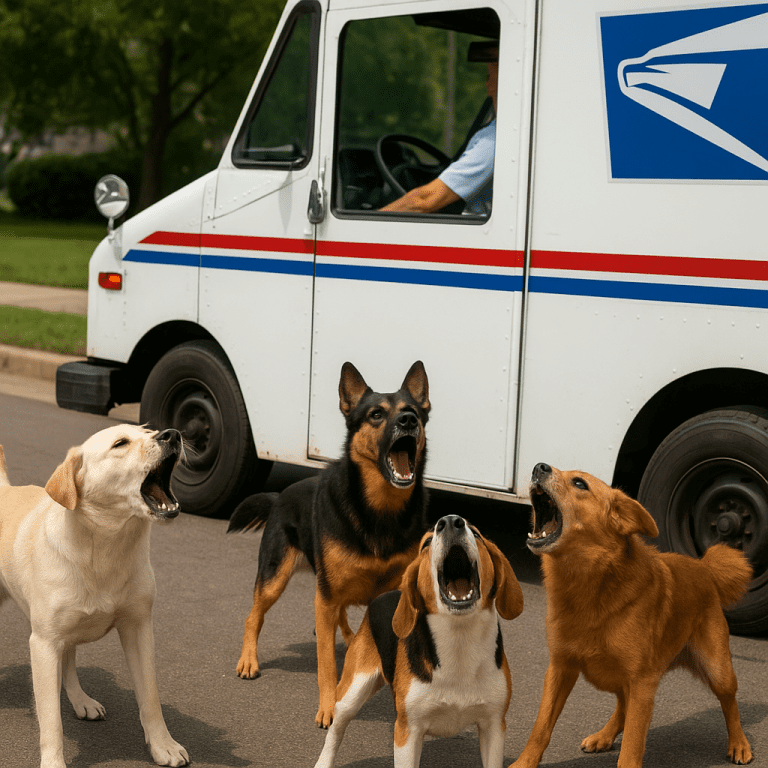
Hyper-Reactivity & Barking: Boredom lowers frustration thresholds, causing dogs to fixate on neighborhood stimuli, delivery drivers, or fence lines.
-
Separation Distress: Lacking the independent coping mechanisms of wild canids, an unanchored social brain often manifests as separation panic.
-
Leash Pulling & Frustration: Physical exercise alone does not exhaust a working canine mind. A two-mile walk where the dog pulls relentlessly burns physical calories without satisfying their neurological need for communication.
Unlocking Your Dog’s Potential
Modern behavioral science demonstrates that true canine fulfillment isn’t about teaching parlor tricks; it’s about providing a clear channel of communication between handler and dog.
At Off Leash Georgia, our training programs are designed around the science of canine cognition. By tapping into your dog’s natural social drive, we replace frustration, reactivity, and stubborn pulling with structured engagement, reliable off-leash recall, and real-world focus.
Your dog might not be solving calculus or picking locks like an octopus, but with the right training, their capacity for human partnership is unmatched.