The Tail Wag Lie: It’s Not Always a Happy Sign
It’s the most common misconception in the world: “His tail is wagging, so he’s friendly!” Unfortunately, this myth leads to thousands of avoidable dog bites every year.
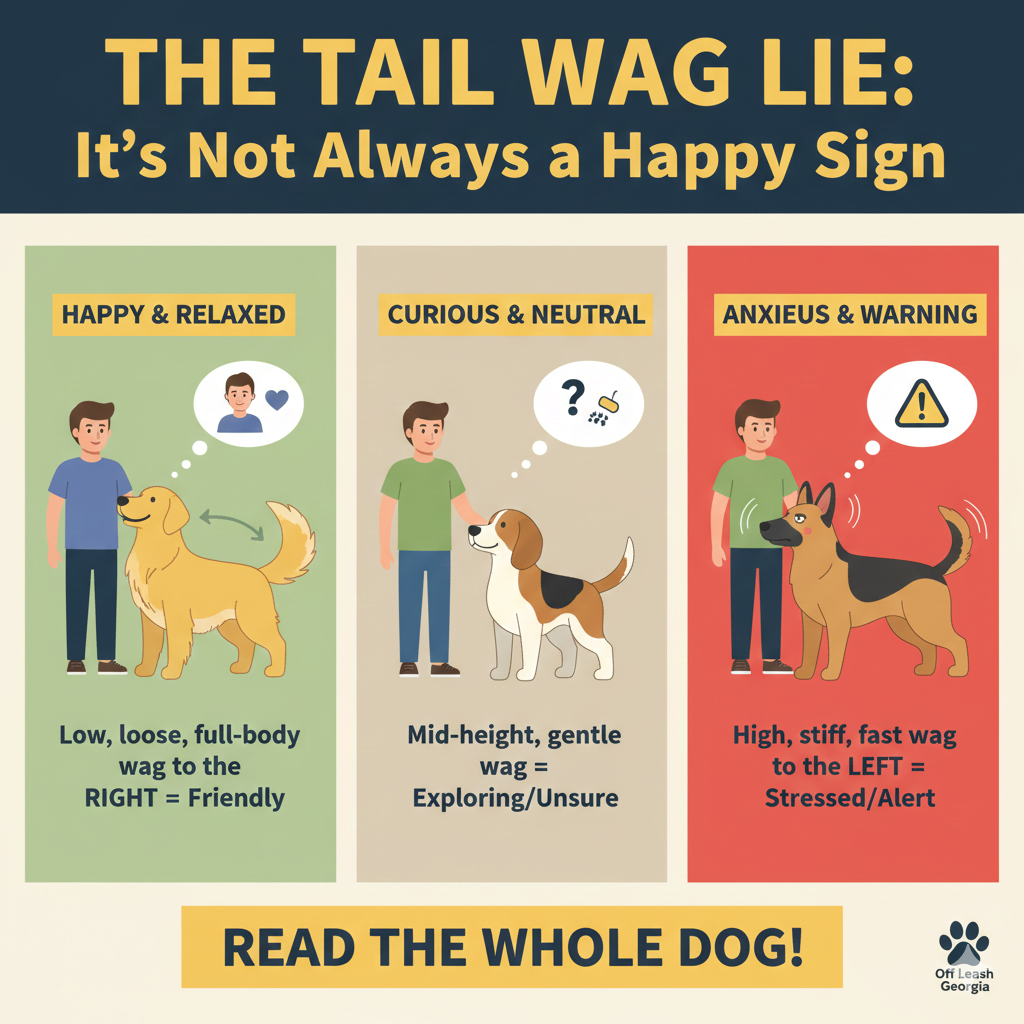
The Science: A wagging tail is simply a sign of arousal or engagement. It’s like a car engine revving—it tells you the “motor” is running, but it doesn’t tell you if the car is in “drive” or “reverse.” To understand the wag, you have to look at the speed, height, and direction.
-
The “Right” Wag: Research shows that dogs wag more to the right when they see something they want to approach (like their owner). This is linked to the left hemisphere of the brain (positive emotions).
-
The “Left” Wag: They wag more to the left when they encounter something they want to avoid or are anxious about.
-
The Height: A high, stiff, vibrating wag (like a flagpole) is often a sign of high-stress arousal and can be a precursor to a bite. A low, sweeping “helicopter” wag is generally a sign of relaxation.
Why This Matters for Training: Before you let a stranger pet your dog or before you introduce your dog to a new friend, look at the whole dog. If the tail is wagging but the body is stiff and the mouth is closed tight, give that dog space.