Sniffing is “Dog TV”: Why Your Dog Needs a “Sniffari”
We’ve all been there: You’re trying to get a quick walk in before a meeting, but your dog is glued to a single blade of grass. It’s tempting to tug the leash and keep moving, but to your dog, that patch of grass isn’t just grass—it’s the morning news, a neighborhood social media feed, and a documentary all rolled into one.
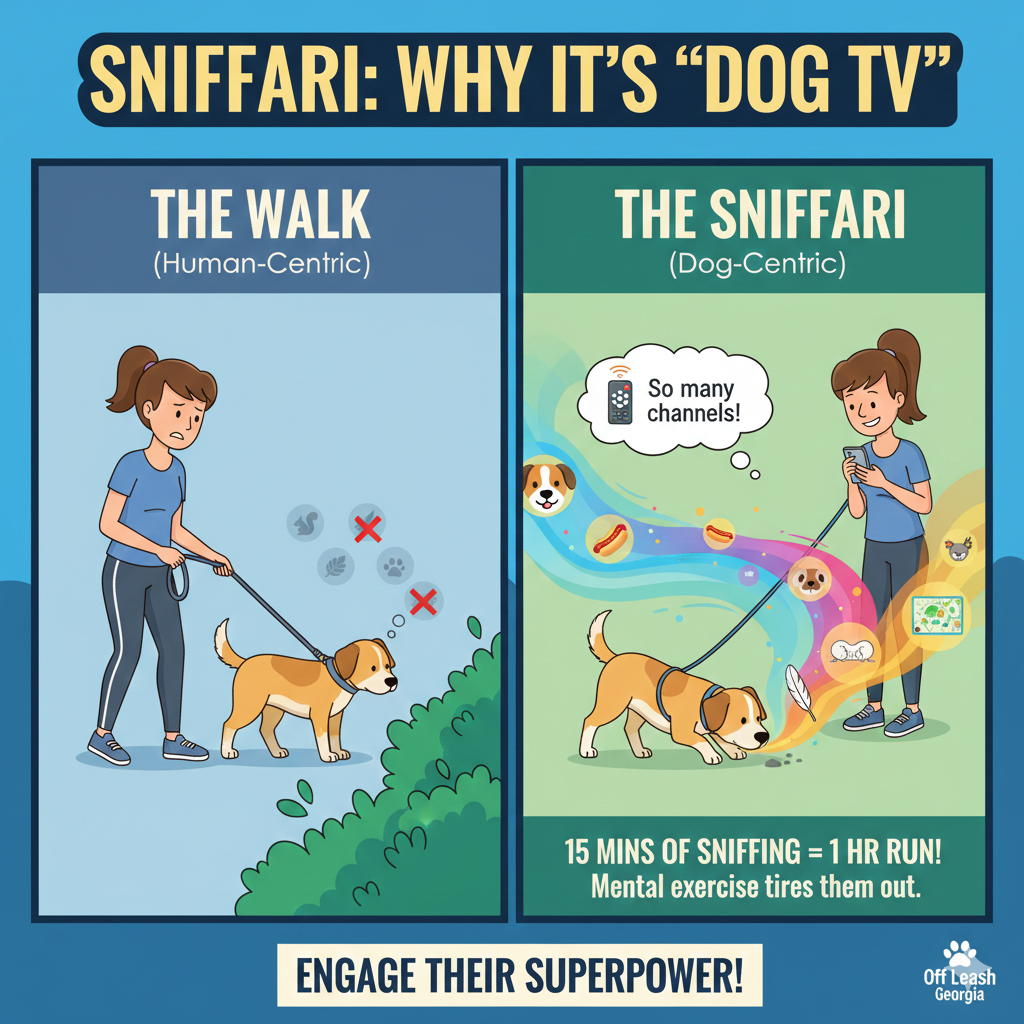
At Off Leash K9 Training Georgia, we often say that sniffing is “Dog TV.” If you want a truly tired and satisfied dog, it’s time to stop focusing on the distance of your walk and start focusing on the “Sniffari.”
The Biology of the Scent: Why It Matters
A dog’s world is built through their nose. While humans have about 6 million olfactory receptors, dogs have up to 300 million. Furthermore, the part of a dog’s brain devoted to analyzing smells is 40 times greater than ours.
When a dog sniffs, they aren’t just “smelling”; they are gathering data. They can tell:
-
Which dogs passed by recently.
-
The health and stress levels of those animals.
-
What the neighborhood wildlife has been up to.
-
Even which direction a person or animal was traveling.
Mental vs. Physical Exhaustion
Many owners believe that a five-mile run is the only way to tire out a high-energy dog. While physical exercise is vital, mental stimulation is often more exhausting.
Pulse rate studies have shown that when dogs are allowed to engage in “scent work” or deep sniffing, their heart rate actually lowers. It is a self-soothing, parasympathetic activity that reduces cortisol (the stress hormone). Spending 20 minutes on a Sniffari can be more mentally draining for a dog than an hour of mindless pavement pounding.
How to Conduct a Proper “Sniffari”
A Sniffari is a walk where the dog is the navigator. Here is how to do it right:
-
The “Long Line” Advantage: If you are in a safe, open area, use a 15-to-20-foot long line (ideally made of a durable material like Para-Max cord for easy cleaning). This gives your dog the freedom to explore a radius without feeling the constant “tug” of a standard 6-foot leash.
-
Follow the Nose, Not the Clock: Forget your step count. If your dog wants to spend three minutes investigating one tree trunk, let them. They are “reading” the fine print.
-
Choose New Environments: Take your dog to a local park, a hiking trail, or even just a different neighborhood. New scents are like a new season of their favorite show—it keeps their brain engaged and prevents boredom-related behaviors at home.
-
The “Decompression” Walk: Use the Sniffari as a decompression tool after a high-stress event, such as a vet visit or a loud thunderstorm. It helps reset their nervous system.
When to Keep it “Off”
While Sniffaris are essential for enrichment, they should be balanced with structured walking. At our Georgia facilities, we teach the value of clear communication. There is a time for a “Heel” (where the dog focuses on you) and a time for “Free Time” or a “Sniffari.”
By giving your dog a designated outlet for their natural instincts, they will be much more focused and willing to work when it’s time for structured obedience.
The Bottom Line
Next time you’re out with your pup, take a breath, put your phone away, and let them lead. You aren’t just walking the dog; you’re letting them explore their world. A dog that gets to use its nose is a happier, calmer, and more well-adjusted companion.