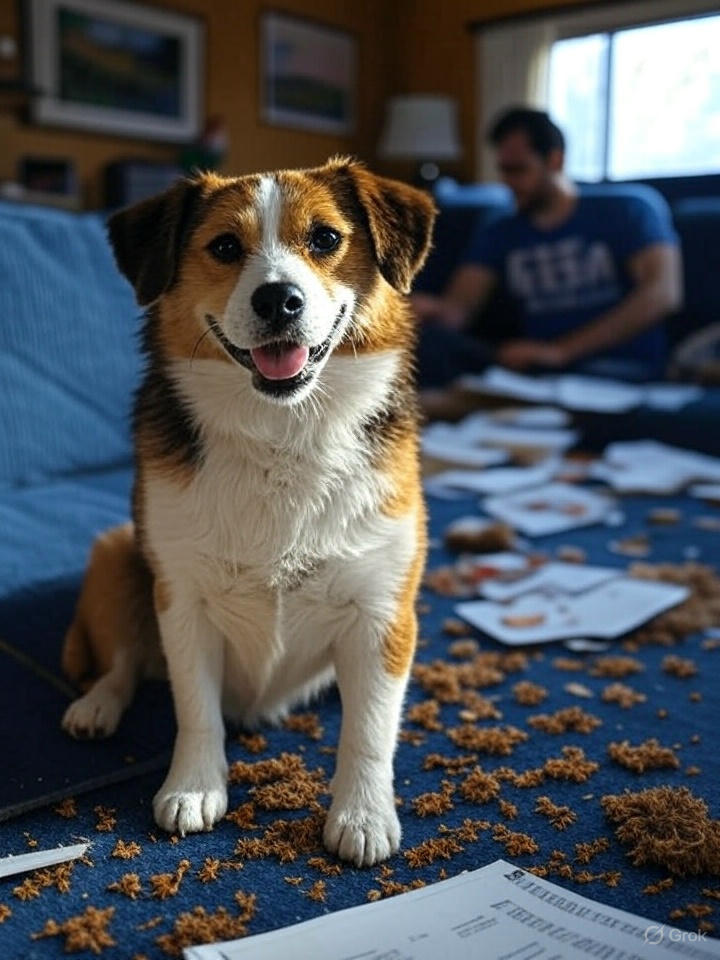
How Do You Fix Separation Anxiety in Dogs? A Science-Backed, Step-by-Step Plan
By Bryan Swihart, Off Leash K9 Training, Georgia
You fix separation anxiety by slowly teaching your dog that being alone is safe. That means short, planned absences that stay below the point where your dog starts to panic, then building time up gradually. This method is called systematic desensitization. For moderate to severe cases, the research and veterinary guidance support adding vet-prescribed medication to that training. Punishment, crating a dog that panics in the crate, and “just more exercise” don’t fix it on their own.
Below is what the science actually says, a step-by-step plan you can start this week, and how our trainers fit it into real life for families in Smyrna, Duluth, Peachtree City, Athens, Augusta, Macon, Columbus and across Georgia.
What is separation anxiety in dogs?
Separation anxiety is real distress that a dog feels when it’s separated from the people it’s attached to. The ASPCA describes the behaviors (barking, chewing, accidents, escape attempts) as distress responses, not disobedience or spite. In AKC’s article on the topic, behaviorist Patricia McConnell, Ph.D., compares it to a panic attack.
Researchers now think “separation anxiety” is several different problems that look alike on the outside:
- In a University of Lincoln study, de Assis and colleagues (2020) surveyed owners of 2,757 dogs that showed separation-related signs. The dogs sorted into four main groups, labeled exit frustration, redirected reactive, reactive inhibited and boredom-related problems.
- Lenkei and colleagues (2021) found that dogs prone to fear tended to whine when left alone. Dogs scoring higher on a “demanding,” frustration-related trait barked more and scratched at the door.
Why does this matter to you? A dog that panics and a dog that’s frustrated about being shut in a room may need different plans. That’s why the first step below is finding out exactly what your dog does when you leave.
If you’re still wondering whether your shadow-dog is just affectionate, start with our post on the “Velcro dog” problem: love or separation anxiety?
What are the signs of separation anxiety in dogs?
According to the ASPCA and AKC, common signs include:
- Pacing, whining or trembling as you get ready to leave
- Barking or howling that keeps going after you’re gone
- Chewing or digging, especially at doors and windows
- Peeing or pooping in the house only when left alone
- Drooling, panting or other obvious stress
- Frantic escape attempts, sometimes causing broken teeth or torn nails
The key test: do these behaviors happen only when your dog is alone or separated from you? The ASPCA notes that if the chewing or house soiling also happens while you’re home, separation anxiety probably isn’t the cause.
What can look like separation anxiety but isn’t?
- Incomplete training or boredom. AKC suggests making sure your dog is truly house trained and has good manners before you label it anxiety.
- Excitement or submissive urination. This happens during greetings and play, not just when you’re gone.
- Medical problems. The ASPCA lists urinary tract infections, incontinence, diabetes, kidney disease and some medications as possible causes of house soiling. See your vet first.
Trainer tip: set up a phone or pet camera and record the first 30 minutes after you leave. AKC recommends recording audio or video. That clip shows you and your trainer whether you’re looking at panic, frustration or boredom.
Why do dogs develop separation anxiety?
The honest answer is that nobody knows exactly. The ASPCA says there is no conclusive evidence for why some dogs develop it. Here’s what the research does point to:
- Big changes in routine or family. The ASPCA links it with a new owner or a shelter stay, a sudden schedule change, a move, or losing a family member.
- Swings in how much time dogs spend alone. In a Dogs Trust study of 1,807 UK dogs during COVID-19 (Harvey et al., 2022), 9.9% had developed new separation-related signs by October 2020. Dogs whose time alone had dropped the most during lockdown were at higher risk of new problems once owners started leaving again. That’s worth knowing when a Georgia family goes back to the office or the kids go back to school. See our back-to-school transition tips.
- Genetics and temperament. In a study of 13,700 Finnish pet dogs (Salonen et al., 2020), anxiety-related traits varied widely between breeds, which suggests a strong genetic part. Separation-related behavior was most strongly linked with hyperactivity/inattention and compulsive behavior.
- Early life experience. A small study that followed Labrador and border collie litters (Bradshaw et al., 2002) found that 13 of 23 Labs showed separation-related behavior for more than a month. Dogs that had socially varied lives between 6 and 12 months of age were less likely to show it later. That’s an association, not proof, but it supports getting young dogs out into the world.
The takeaway: separation anxiety isn’t your dog being spiteful, and it usually isn’t because you did one thing wrong.
How do you fix separation anxiety step by step?
This plan follows ASPCA and AKC guidance and the research on systematic desensitization. For severe cases (self-injury, breaking out of crates, nonstop distress), bring in your vet before you start.
- Get a vet check and a baseline. Rule out medical causes, then record your dog. Write down how many minutes pass before the whining, pacing or barking starts. That number is your starting threshold.
- Stop the panic reps while you train. The ASPCA describes the goal as having your dog experience being alone without fear. Every long absence that ends in panic works against you. While you train, arrange help where you can: a family member, a sitter, or a daycare your dog is comfortable at.
- Take the meaning out of your departure cues. AKC suggests picking up your keys or putting on your coat and then not leaving. Go make dinner instead. Repeat until your keys and shoes stop predicting an absence.
- Practice short, planned absences (systematic desensitization). Step out for a time well under your dog’s threshold, even just seconds. Come back before any distress starts, and build up gradually. If your dog gets upset, go back to a shorter time.
- Teach calm independence while you’re home. AKC recommends teaching your dog to be alone in another room while you’re home and building a solid stay until your dog can hold it out of sight for 5–10 minutes. A Place command (go to a bed or mat and stay there until released) is a practical way to build this.
- Keep goodbyes and hellos boring. AKC advises calm, low-key departures and returns so your comings and goings don’t become a big emotional event.
- Use exercise and enrichment as support, not as the cure. AKC is clear that exercise can’t cure separation anxiety, but it can help. The ASPCA suggests food puzzle toys and chews when your dog is left alone. If those go untouched, that’s a sign your dog is too stressed to eat, so shorten your absences.
- Talk to your vet about medication if progress stalls or if your dog is hurting itself (more on this below).
What does the research say about desensitization?
Butler, Sargisson and Elliffe (2011) ran a controlled study with 8 dogs and their owners. Using mainly systematic desensitization, the frequency and severity of separation-related behaviors dropped significantly. Six dogs followed up three months later showed almost complete elimination of the problem behavior. Two findings stood out:
- Desensitization seemed to be the critical piece. Counter-conditioning (special treats) and other advice weren’t related to success.
- Dogs still improved even when owners applied the plan inconsistently.
The caveat: 8 dogs is a small study. It’s encouraging and fits decades of behavior science, but it isn’t the final word.
Does medication help dogs with separation anxiety?
Yes, for many dogs, when it’s combined with training. The FDA has approved two drugs for canine separation anxiety, both labeled for use with behavior modification:
- Clomipramine (brand name Clomicalm, and now a generic), for dogs over 6 months old
- Fluoxetine chewable tablets (brand name Reconcile)
In a randomized, placebo-controlled trial of 95 dogs (King et al., 2000), all dogs received behavioral therapy. Dogs on a standard dose of clomipramine were rated improved at least three times faster for destruction, peeing and pooping than dogs on placebo. There was no significant difference for vocalizing, though. Medication helped, but it didn’t fix everything.
The ASPCA says most dogs need a combination of medication and behavior modification. Only a vet can prescribe these drugs, so always work with your veterinarian or a veterinary behaviorist. A 2008 veterinary review by Sherman and Mills lists behavioral management, medication and pheromones as treatment options. For calming supplements or CBD, ask your vet before relying on them.
What makes separation anxiety worse?
- Punishment after the fact. ASPCA and AKC both warn that punishing a dog for what happened while you were gone adds to its anxiety and can make the problem worse.
- Forcing the crate on a dog that panics in it. AKC notes that some dogs feel safer crated while others panic. Watch which one your dog is.
- Jumping straight to long absences before your dog can handle short ones.
- Big, emotional goodbyes and reunions.
- Counting on exercise alone. A tired dog still panics if it’s scared. We explain why in The Cardio Trap.
Does crate training help separation anxiety?
It depends on the dog. For dogs that see the crate as a safe den, it can keep them and your house safe while you work on the plan. AKC says the goal isn’t to crate your dog all day as a “solution.” A dog that pants, drools, or tries to break out of a crate is telling you the crate is making things worse. Read more in 4 Reasons to Crate Train and, for adopted adults, crate training an older rescue dog.
How long does it take to fix separation anxiety?
There’s no honest one-size answer. It depends on how severe the problem is, how far below threshold you can keep your dog, and whether medication is part of the plan. For context, the clomipramine trial measured progress over 12 weeks, and the desensitization study checked back after three months. Plan on weeks to months, not days, and expect some setbacks along the way.
How do Off Leash K9 trainers help dogs with separation anxiety?
Training is a big part of the solution, but it isn’t the whole thing for a dog in true panic. That’s where your vet comes in. Here’s where we can help:
- Calm, independent skills. Our board-and-train programs teach Place and Extended Place, Sit and Down with duration, and door manners. These are the skills that let a dog settle on its own instead of following you room to room.
- Structure for puppies. Our 1-Week “Puppy” Board & Train starts a crate and potty routine. See puppy training.
- Support that continues at home. Our 1-Week “Freedom” and 2-Week Board & Train include free 1-hour private refresher lessons for the life of your dog, so you can come back while you work through the absence plan.
- Methods matched to your dog. We are primarily e-collar trainers, and we tailor the approach to each dog. We also offer a marker-based Basic Marker Mastery program.
- Real results you can watch. We have more than 5,000 before-and-after videos on our YouTube channel.
Have your camera footage ready when you call. It helps us figure out which kind of separation problem we’re dealing with.
Frequently asked questions about dog separation anxiety
Can a puppy outgrow separation anxiety?
Some mild puppy fussing when left alone does fade with age and practice. AKC notes that true separation anxiety usually needs training and behavior modification, so don’t count on waiting it out.
Is it separation anxiety or boredom?
Watch a recording. Anxious dogs show stress signs like pacing, whining, drooling or escape attempts, and the ASPCA notes these often start within minutes of you leaving. AKC points out that separation anxiety is not the same as boredom. If your dog looks relaxed on video and just finds something to chew, boredom or incomplete training is more likely. Researchers have even described a “boredom” subgroup within separation problems, which is why video matters.
Should I punish my dog for destroying things while I was gone?
No. ASPCA and AKC both say punishment adds to the anxiety and can make the problem worse. Clean up calmly and adjust your plan so your dog isn’t left past its limit.
What medications are approved for separation anxiety in dogs?
The FDA has approved clomipramine (Clomicalm and a generic) and fluoxetine chewable tablets (Reconcile) for canine separation anxiety, both to be used with a behavior modification plan. Your veterinarian decides whether either is right for your dog.
Does doggy daycare help separation anxiety?
Daycare can be useful management because it keeps your dog from being left alone past its limit while you train. We haven’t found research showing that daycare treats separation anxiety by itself. Learn more in Doggy Daycare Decoded.
How long does it take to fix separation anxiety?
Usually weeks to months. It depends on severity, how consistently your dog is kept below its threshold, and whether medication is involved. In studies, progress was measured over about three months.
Where can I get help with separation anxiety in Georgia?
Off Leash K9 Training, Georgia has facilities in Smyrna, Duluth, Peachtree City, Athens, Augusta, Macon and Columbus. Call (770) 450-0988 or use our contact form.
Ready to help your dog feel safe home alone?
Call (770) 450-0988 or contact us online to talk with a trainer near you. You can see current programs and prices on our Packages page.
Sources
- ASPCA. Separation Anxiety.
- Gibeault, S. American Kennel Club. Separation Anxiety in Dogs: Causes, Prevention, and How to Solve It.
- Butler, R., Sargisson, R. J., & Elliffe, D. (2011). The efficacy of systematic desensitization for treating the separation-related problem behaviour of domestic dogs. Applied Animal Behaviour Science, 129(2–4), 136–145. doi:10.1016/j.applanim.2010.11.001
- de Assis, L. S., Matos, R., Pike, T. W., Burman, O. H. P., & Mills, D. S. (2020). Developing diagnostic frameworks in veterinary behavioral medicine: Disambiguating separation related problems in dogs. Frontiers in Veterinary Science, 6, 499. PubMed
- Lenkei, R., Faragó, T., Bakos, V., & Pongrácz, P. (2021). Separation-related behavior of dogs shows association with their reactions to everyday situations that may elicit frustration or fear. Scientific Reports, 11, 19207. PubMed
- Harvey, N. D., et al. (2022). Impact of changes in time left alone on separation-related behaviour in UK pet dogs. Animals, 12(4), 482. PubMed
- Salonen, M., et al. (2020). Prevalence, comorbidity, and breed differences in canine anxiety in 13,700 Finnish pet dogs. Scientific Reports, 10, 2962. PubMed
- Bradshaw, J. W., McPherson, J. A., Casey, R. A., & Larter, S. (2002). Aetiology of separation-related behaviour in domestic dogs. Veterinary Record, 151(2), 43–46. PubMed
- King, J. N., et al. (2000). Treatment of separation anxiety in dogs with clomipramine: results from a prospective, randomized, double-blind, placebo-controlled, parallel-group, multicenter clinical trial. Applied Animal Behaviour Science, 67(4), 255–275. PubMed
- U.S. Food and Drug Administration. FDA Approves Clomipramine Hydrochloride Tablets to Treat Separation Anxiety in Dogs.
- Federal Register (2007). Oral Dosage Form New Animal Drugs; Fluoxetine (Reconcile approval).
- Sherman, B. L., & Mills, D. S. (2008). Canine anxieties and phobias: an update on separation anxiety and noise aversions. Veterinary Clinics of North America: Small Animal Practice, 38(5), 1081–1106. PubMed