Service Dog, Emotional Support Animal (ESA), or Therapy Dog? Understanding the Critical Differences
At Off Leash Georgia, one of the most frequent conversations our trainers have with clients revolves around distinguishing between a service dog, an emotional support animal (ESA), and a therapy dog. While each role relies on the deep connection between humans and canines, they carry fundamentally different legal protections, public access rights, and training requirements.
What is a Service Dog and Where Are They Allowed? (or What Legal Rights Do Service Dogs Have?)
1. Service Dogs: Tasks, Public Access, and the Certification Myth
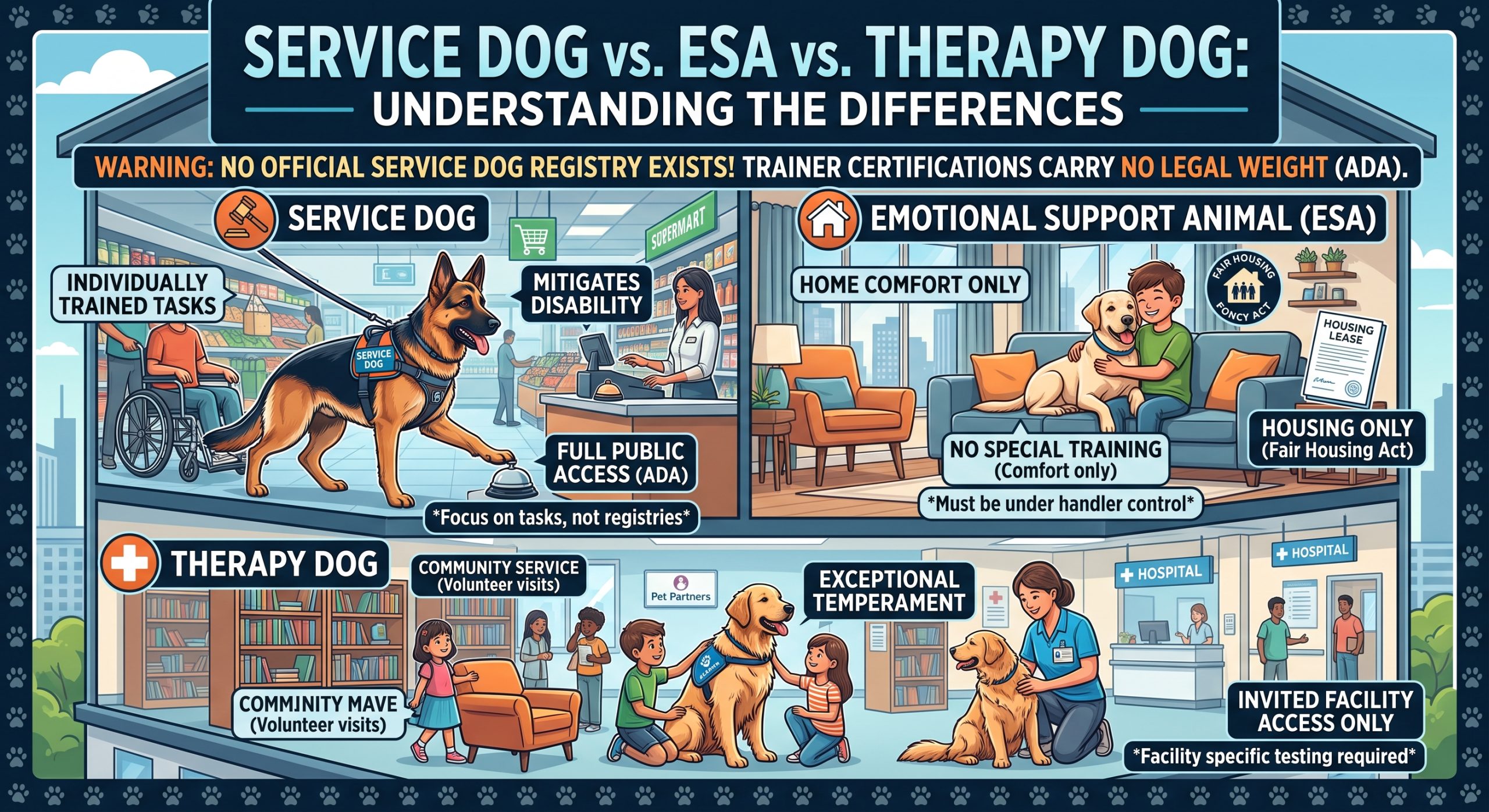
A service dog is individually trained to perform specific, measurable tasks directly related to a handler’s diagnosed physical, sensory, psychiatric, or intellectual disability. Federal law views these dogs as essential medical equipment rather than pets.
-
Public Access Rights: Under the Americans with Disabilities Act (ADA), fully trained service dogs have comprehensive public access rights. They can accompany their handler anywhere the general public is permitted, including restaurants, grocery stores, hotels, flights, and medical clinics.
-
The “Trainer Certification” Myth: Many commercial dog trainers advertise that they can “certify” your dog as an official service dog. Under the ADA, this is entirely false. The Department of Justice does not license, recognize, or approve any private trainer, school, or organization to grant legally binding service dog credentials. While professional trainers are invaluable for teaching obedience and complex tasks, a certificate or diploma from a dog trainer carries zero legal standing under federal law.
-
Online Registry Scams: Websites selling digital ID cards, embossed certificates, or “official national registry” entries are commercial scams. The federal government does not maintain or recognize any registry for service animals.
-
Gear and Identification: Service dogs are not required to wear a vest, harness, badge, or patch. A dog’s legal status is determined strictly by its specific task training and behavioral control in public.
-
The Two Legal Questions: To protect handler privacy, business staff may only ask two specific questions when a disability is not obvious:
-
Is the dog a service animal required because of a disability?
-
What work or task has the dog been trained to perform?
-
What is an Emotional Support Animal (ESA) and Do They Have Public Access?
2. Emotional Support Animals (ESAs): Home-Based Comfort
Emotional Support Animals provide therapeutic comfort and companionship to an owner managing a diagnosed mental health condition. Unlike service dogs, ESAs are not required to be trained in disability-mitigating physical tasks.
-
Legal Scope: Protections for ESAs apply strictly to housing under the Fair Housing Act (FHA). When accompanied by a valid letter from a licensed mental health professional, landlords must grant reasonable accommodations without charging pet rent, pet deposits, or enforcing breed/weight restrictions.
-
No Public Access Rights: ESAs do not have public access under the ADA. They cannot legally accompany owners into non-pet-friendly stores, restaurants, or businesses, and airlines are no longer required to accept them in the cabin as service animals.
-
Behavior and Nuisance Standards: FHA accommodation is not an excuse for poor behavior. An ESA must remain under handler control, be completely housebroken, and coexist quietly within a residential community. Landlords have the legal right to deny or revoke an accommodation if an ESA displays unprovoked aggression, damages property, or creates an ongoing nuisance, such as persistent barking that disrupts neighbors.
What is a Therapy Dog and How Are They Different?
3. Therapy Dogs: Comfort for the Community
Therapy dogs provide affection, stress relief, and social interaction to the public rather than an individual handler. Handler-dog teams volunteer in structured settings such as hospitals, schools, hospice centers, nursing homes, and disaster relief zones.
-
No General Public Access: A therapy dog is legally considered a pet in public spaces. They are permitted entry only into specific facilities where they are officially invited, scheduled, and covered by a sponsoring organization’s liability insurance.
-
Contact Your Target Facility First: Therapy organizations—such as Pet Partners, Alliance of Therapy Dogs, or Therapy Dogs International—maintain distinct testing protocols and insurance policies. If you want to volunteer at a specific local hospital, library reading program, or school district, contact that facility’s volunteer coordinator first. Find out which certifying organization they partner with before investing time and money into a testing process they might not accept.
-
Requirements: Therapy dogs require exceptional social stability, complete neutrality around medical equipment (wheelchairs, crutches, IV poles), and reliable obedience under high-distraction environments.
Quick Comparison Overview
| Category | Primary Beneficiary | Task Training Required? | Public Access Rights (ADA) | Primary Governing Law |
| Service Dog | Handler only | Yes (disability-specific) | Yes (all public spaces) | ADA, FHA, ACAA |
| ESA | Owner only | No (comfort only) | No (housing only) | Fair Housing Act (FHA) |
| Therapy Dog | General public | No (temperament-focused) | No (invited facilities only) | Facility permission |
The Foundation: Rock-Solid Obedience and Neutrality
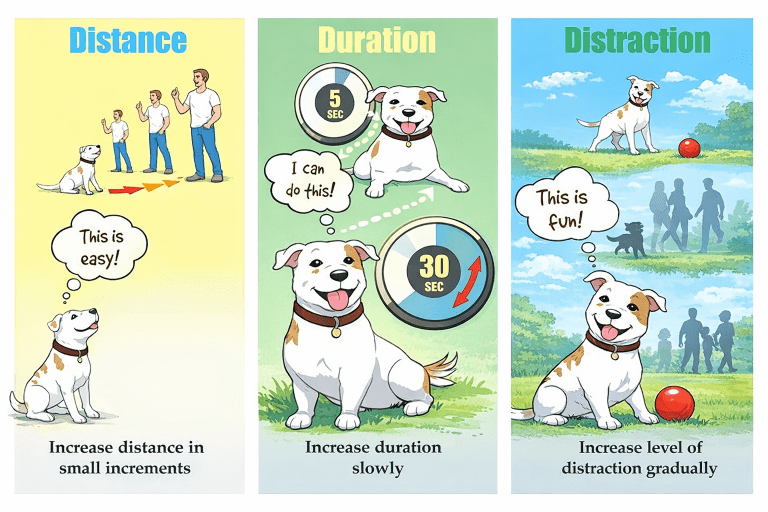
Whether your goal is training a service dog to ignore overwhelming environmental triggers, ensuring your ESA is a model tenant in an apartment complex, or preparing for therapy dog evaluations, off-leash obedience and neutral temperament form the cornerstone of success. Consistent communication, reliable impulse control, and structured exposure ensure a dog performs calmly and dependably across any environment.