
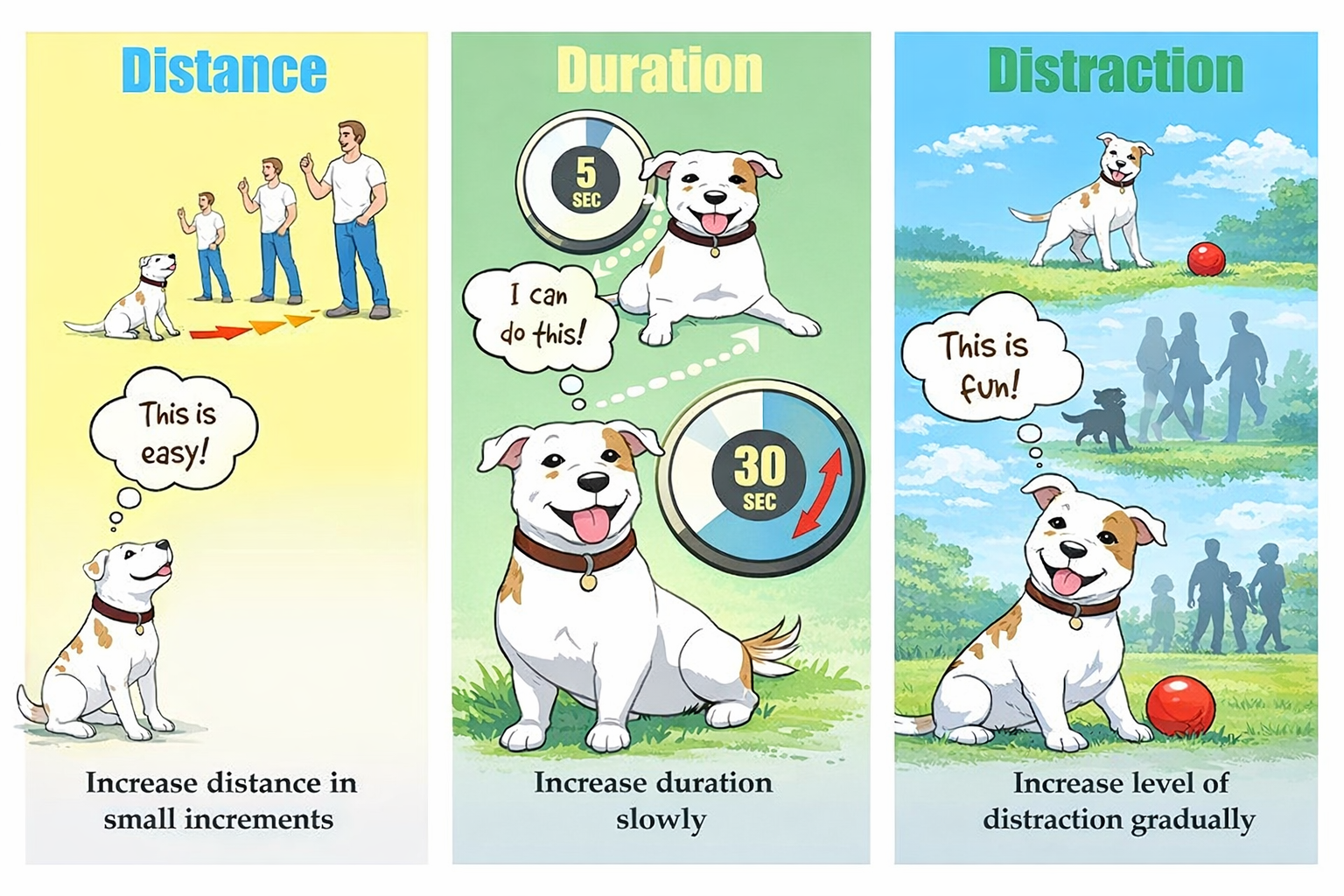
The 3 Ds of Dog Training
Why You Need to Incorporate Them in Different Locations – Sooner and More Often
Hey everyone, Off Leash K9 Training in Georgia. We’ve trained thousands of dogs over the years, and one of the biggest mistakes I see owners make is thinking their dog “knows” a command just because they nail it in the living room or backyard. The truth? Real-world obedience – especially off-leash reliability – comes down to mastering the 3 Ds: Duration, Distance, and Distraction.
These aren’t just buzzwords; they’re the foundation of proofing behaviors so your dog listens anywhere, anytime. Today, I’m diving into what the 3 Ds are and, more importantly, why you need to start incorporating all three in different locations with varying distractions as early and as often as possible.
What Are the 3 Ds?
- Duration: How long your dog can hold a command (like a sit-stay or down for 30 seconds, then minutes).
- Distance: How far away you can be from your dog while they obey (starting close, then stepping back to 10, 20, or more feet).
- Distraction: Anything competing for your dog’s attention – squirrels, other dogs, kids playing, traffic, you name it.
The key rule? Only increase one D at a time. If you’re adding distance, keep duration short and distractions low. This sets your dog up for success and builds confidence.

Why Vary Locations and Distractions Sooner – and More Often?
Dogs don’t generalize well. What I mean is, if your dog learns “sit” perfectly in your quiet kitchen, they might blow you off completely at a busy park. Changing locations introduces new smells, sights, sounds, and surfaces – all of which act as built-in distractions.
Here’s why pushing the 3 Ds across multiple environments early on is crucial:
- Builds True Reliability: Training only at home creates a “context-specific” dog. They think commands only apply there. By practicing in 10+ different spots (home, yard, park, pet store, downtown, friend’s house), you’re teaching them obedience is universal.
- Prevents Frustration and Setbacks: Many owners wait too long to add real-world proofing. Then, when the dog fails around distractions, they get discouraged. Starting sooner (once basics are solid) and doing it often prevents those “my dog forgets everything outside” moments.
- Boosts Confidence and Focus: Gradual exposure to new places and distractions teaches your dog to tune into you no matter what’s going on. This is especially vital for off-leash freedom – imagine your dog ignoring a squirrel because they’ve practiced that scenario dozens of times in different parks.
- Real-Life Safety: A dog that only listens in low-distraction spots isn’t safe off-leash. Varying locations sooner means they’re prepared for anything: a sudden bike rider, another dog approaching, or kids running up.
At Off Leash K9 Training Georgia, we hammer this in every program. We don’t just train in one spot – we proof commands everywhere, combining the 3 Ds progressively. That’s why our grads have that rock-solid off-leash obedience owners dream about.
How to Get Started
- Master basics in a low-distraction spot.
- Pick one D to increase, then move to a slightly new location.
- Practice short sessions often – 5-10 minutes, multiple times a week in different places.
- Celebrate wins and go back a step if they struggle.
If you’re in Georgia and want help proofing your dog’s skills for real-world freedom, reach out to us at Off Leash K9 Training. We’d love to get your pup thriving off-leash!
What challenges have you faced with distractions? Drop a comment – let’s chat!