The “Robot Dog” Myth
Why Your Dog Listens to Me, But Not Your Spouse
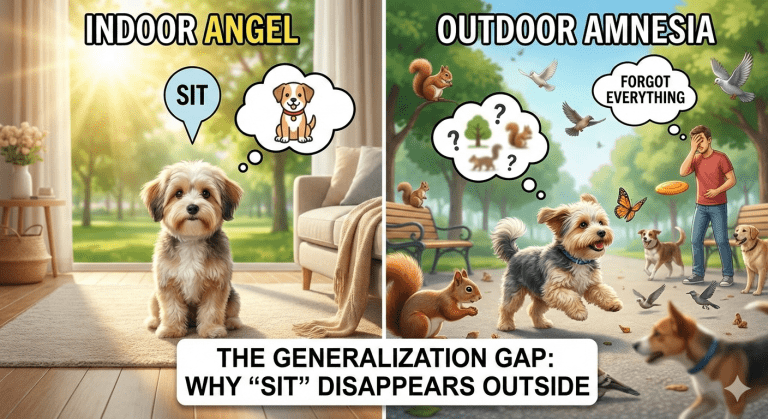
One of the most common frustration calls I get goes something like this: “We picked up Fido from his training program, and he was perfect for you! But now that we are home, he listens to me, but he completely ignores my husband/wife/kids. Did the training wear off?”
The short answer is no. The training didn’t wear off. But there is a fundamental truth about dog psychology that many owners overlook: Dogs are not robots. You cannot “install” a software program called Sit.exe and expect it to run perfectly for anyone who pushes the button.
The “Pack” Mentality
Even the most elite, well-trained dogs generally only listen to their owners or their specific “pack.” They do not listen to just anyone.
Think about the relationship you have with your boss versus a stranger on the street. If your boss asks you to file a report, you do it because there is a history of reinforcement (paychecks) and authority. If a stranger on the street yells at you to file a report, you’ll ignore them.
Your dog is doing the same thing. If one person in the house does all the work, feeds the dog, and enforces the rules, the dog assumes that person is the “boss.” Everyone else is just a roommate with no authority.
The Police K9 Analogy
To understand this better, let’s look at the highest level of dog training: Police K9s.
Police dogs are trained with incredible precision. However, if a K9 is sent to apprehend a suspect, and that suspect starts yelling commands like “Out!” or “Down!”, the dog will absolutely ignore them.
Why? The dog knows what the word “Out” means. But the dog has no relationship, no trust, and no history of reinforcement with the suspect. The dog is looking for direction solely from their handler.
Your home is similar. If you are the “handler” in your home, and your spouse or children never work with the dog, they are essentially the “suspect” in the dog’s eyes—noise without authority.
How Training becomes Transferable
The good news is that obedience is transferable, but it doesn’t happen by magic. It happens through Reinforcement.
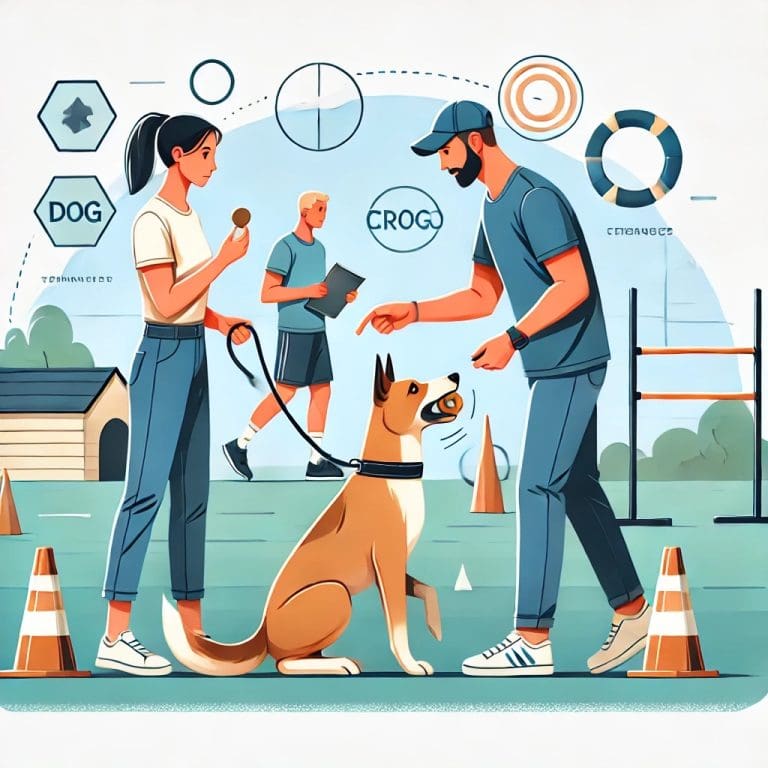
This is why we tell all our clients that dog training is not a spectator sport. All training requires reinforcement by the owners—meaning every single human in the home.
The formula for a reliable dog looks like this:
Command+Relationship History=Obedience
If you remove the Relationship History (the time spent working with the dog), the Obedience falls apart.
The Solution: Everyone Works the Dog
If you want your dog to listen to your husband, your wife, or your teenagers, those family members must become relevant to the dog. Here is how you fix the imbalance:
- Share the Duties: Don’t let one person do all the feeding and walking. Rotate who holds the leash.
- Practice “Pay for Play”: If the kids want to play with the dog, have them ask for a “Sit” or “Down” first. The dog must learn that listening to the kids leads to good things.
- Correct the Dog: If the dog ignores a command from a family member, that family member must be the one to follow through. If Mom steps in to save Dad every time the dog ignores him, the dog learns that Dad is helpless.
The Bottom Line
A well-trained dog is a joy to live with, but that training is maintained by the people living with the dog. If you don’t use it, you lose it.
Make sure everyone in your pack is speaking the same language, enforcing the same rules, and providing the same reinforcement. That is how you turn a “one-person dog” into a true family companion.