The “Velcro Dog” Problem: Is it Love or Separation Anxiety?
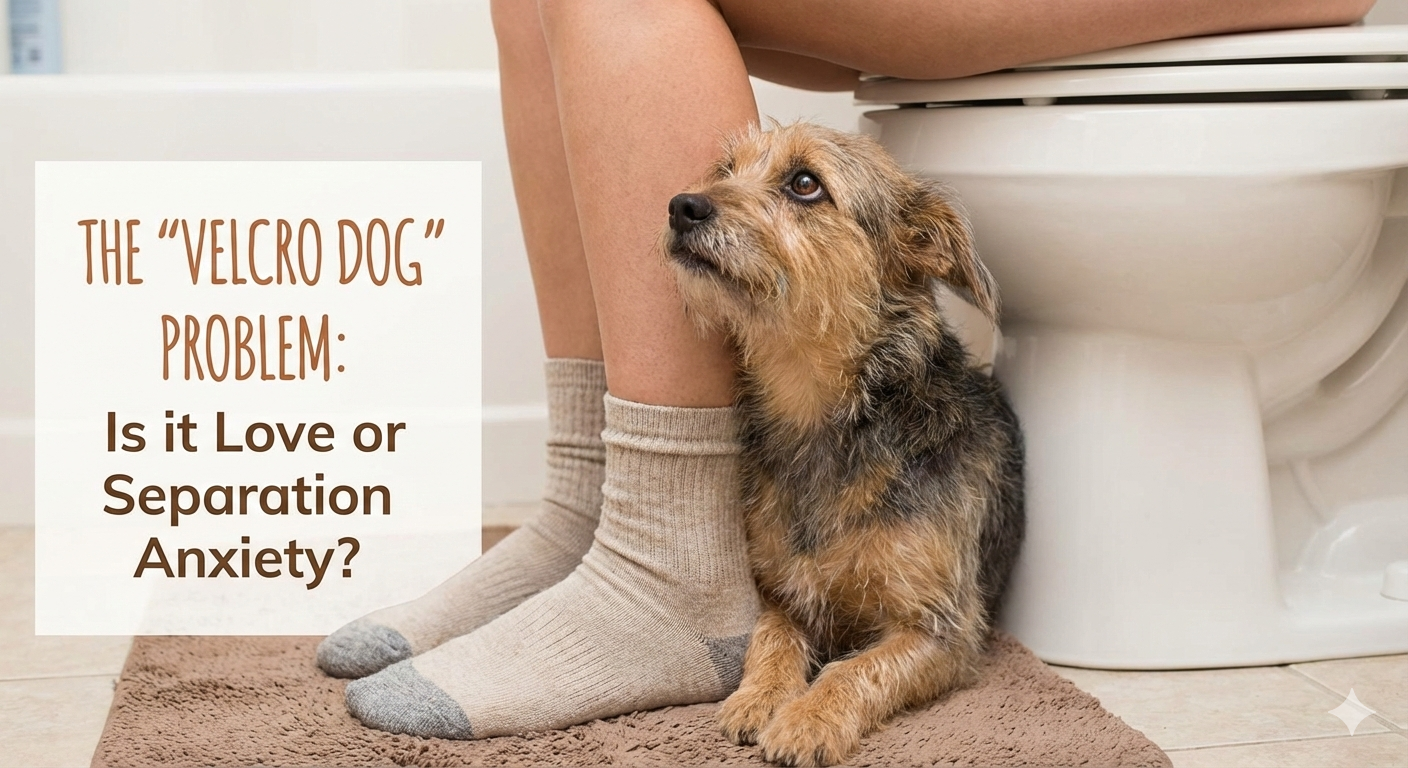
Does your dog act like your personal shadow? Whether you’re heading to the kitchen for a glass of water or trying to use the bathroom in peace, your “Velcro dog” is right there, leaning against your legs.
While it’s easy to write this off as “they just love me so much,” there is a fine line between a bonded companion and a dog struggling with underlying stress.
Velcro Behavior vs. Separation Anxiety
Understanding velcro dog behavior is the first step in ensuring your pup is actually happy, not just hovering.
-
The Velcro Dog: Follows you from room to room but can relax if you leave the house. They are “nosy” but not panicked.
-
The Separation Anxiety Dog: This is a panic disorder. If they can’t get to you, they might bark incessantly, destroy door frames, or have accidents.
Why the “Shadow” Habit Can Be a Red Flag
If a dog never learns to be alone while you are inside the house, they will never feel confident when you are outside the house. Constant hovering is often a sign of “lack of confidence.” They rely on you as a safety crutch rather than feeling secure in their own skin.
How to Fix Separation Anxiety in Dogs (and Clinginess)
Building “independent confidence” is the best gift you can give your dog.
-
The “Place” Command: This is our favorite tool at Off Leash K9. Teaching your dog to stay on a raised cot or bed while you move around the room teaches them that they don’t need to be touching you to be safe.
-
Stop the “Goodbye” Rituals: Don’t make a big deal when you leave or come home. It should be a non-event.
-
Enforce Boundaries: It sounds harsh, but close the bathroom door. Give them short periods where they cannot see you, rewarded by calm praise when you return.
A confident dog is a happy dog. By teaching your pup that they can exist successfully three feet away from you, you’re actually lowering their overall cortisol and making them a more stable companion.