
The “Invisible Leash”: 3 Myths vs. The Reality of Modern E-Collar Training
Many owners feel a mix of curiosity and hesitation when they hear the term “e-collar.” They’ve seen the incredible results—dogs off-leash in a crowded park, perfectly attentive and happy—but they worry about the “how.”
As a professional, I’ve seen thousands of dogs transformed by this tool. The truth is, modern e-collar training isn’t about “punishment”; it’s about timing & clarity. Here are the three biggest myths we hear, and the reality of how we actually train.
Myth 1: “It’s a Shock Treatment”
The Reality: Modern collars use Electronic Muscle Stimulation (EMS)—the exact same technology used by physical therapists to rehab human muscles. It isn’t a sharp “jolt.” At the levels we use for training, it feels like a subtle tap or a “tingle” on the shoulder. We find the “working level” for each dog, which is often so low that a human wouldn’t even feel it on their own skin. It’s a long-distance way to say, “Hey, I’m talking to you,” even when the dog is 100 yards away.
Myth 2: “It’s Only for ‘Aggressive’ or ‘Bad’ Dogs”
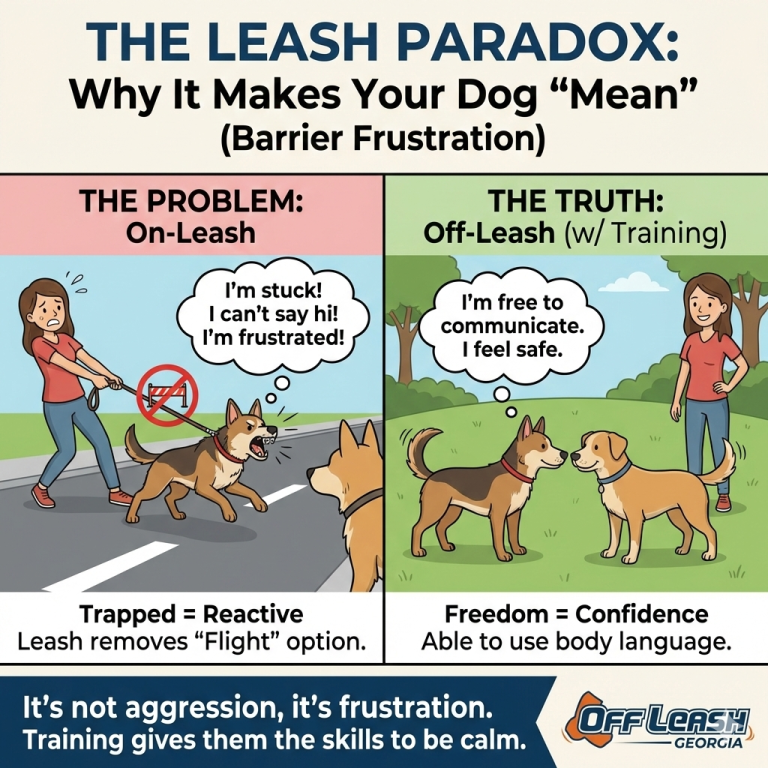
The Reality: We use e-collars for the “Goodest Boys,” too. While it’s a lifesaver for behavior modification, its primary use is giving a dog total freedom. Whether it’s a Golden Retriever who just wants to chase a squirrel or a Lab who loves the lake, the e-collar is their “safety belt.” It allows them to live life off-leash while giving the owner the peace of mind that they can always get their dog’s attention instantly.

Myth 3: “The Dog is Only Obeying Because They’re Scared”
The Reality: If a dog is scared, they stop learning. Watch a dog trained with a balanced approach: their tail is up, their eyes are bright, and they are excited to work. Why? Because the e-collar removes the “guessing game.” When a dog understands exactly what is expected of them, their anxiety drops. It’s not about fear; it’s about confidence.

Ultimately, modern e-collar training isn’t about control through fear; it’s about communication through clarity and proper timing. By clearing away the myths and embracing the “invisible leash,” you aren’t just gaining a well-behaved dog—you’re gaining the peace of mind to explore the world together. When you trade uncertainty for a reliable connection, you unlock a level of freedom and adventure that every dog deserves. Ready to see the difference for yourself? Let’s start building that bond today.